Program

Forum: Fellows Face-to-Face

Workshop Organizer

Yan Zhang

University of Electronic Science and Technology of China

Speakers

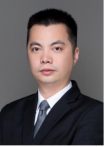
Pin-Han Ho

Shenzhen Institute for Advanced Study, UESTC

Topic: Observation-Driven World Models for Embodied Edge AI
Abstract: Embodied AI requires agents not only to reason about the world, but also to actively determine what aspects of the world can be observed, represented, and updated. Unlike conventional AI systems that learn from fixed datasets, embodied agents operate under dynamic sensing conditions where actions, sensors, and environments jointly determine the available evidence. This talk introduces an observation driven perspective for designing world models in embodied edge AI, where observation becomes the fundamental interface between physical reality and intelligent decision-making.
We present a five-layer observation framework spanning physical sensing, structured wireless observations, observation tokens, belief-maintaining world models, and closed-loop belief updates. At the sensing layer, actions are designed to create meaningful distinguishability rather than merely increase data volume. At the observation layer, wireless measurements are treated as context-dependent evidence that must preserve acquisition conditions, reliability, and uncertainty. Observation tokens provide a standardized interface that packages evidence, context, provenance, and uncertainty for downstream reasoning. World models then maintain beliefs over observable knowledge states rather than arbitrary latent representations, while belief-driven actions actively select future observations to resolve remaining ambiguity.
This framework establishes a foundation for adaptive embodied intelligence, where sensing, representation, memory, and reasoning form a closed loop. The central message is that intelligent systems can only understand what their observation processes make distinguishable.

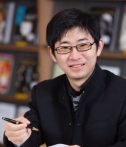
Zibin Zheng

Sun Yat-sen University

Topic: 区块链可靠性:研究挑战与技术进展
Abstract: 软件系统复杂化及大规模化的趋势,使得软件可靠性的保障变的越来越困难。区块链具有去中心化、公开透明、防篡改等特点,这些特点也对其可靠性保障带来了新的挑战。本报告将分享区块链在体系结构、智能合约、交易网络三个层面的可靠性研究挑战与进展,并着重介绍智能合约可靠性的相关研究工作。
Short Bios: 郑子彬,中山大学软件工程学院院长、中山大学人工智能研究院副院长、IEEE Fellow、IET Fellow、ACM杰出科学家、国家数字家庭工程技术研究中心副主任、广东省区块链工程技术研究中心主任。发表论文多篇,论文谷歌学术引用超过6万次,H指数为107。主持国家重点研发计划项目、自然科学基金重点项目等多个项目;获得教育部自然科学二等奖、 吴文俊人工智能自然科学二等奖、 ACM SIGSOFT Distinguished Paper Award等奖项。研究方向为区块链、Web3、软件可靠性、可信大模型等。

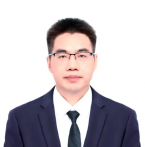
Min Chen

South China University of Technology

Topic: HongWU: Hierarchical On-demand Cognitive Big Model with World Utility
Abstract: This talk introduces HongWU (Hierarchical On-demand Machine-Cognitive Model with World Utility), a unified cognitive framework designed to address fundamental bottlenecks facing contemporary large-scale models: training data depletion, insufficient alignment with human intent, and inadequate grounding in physical systems. The HongWU framework integrates physical models, multi-source data, and intelligent tools into a unified tool matrix orchestrated by the foundation model. Through parameter efficient Fine-tuning and Human-in-the-loop feedback, the model dynamically aligns its objectives with human needs. Its federated knowledge engine, multi-level spatiotemporal reasoning, and multi-agent workflow ensure physically consistent reasoning and enable scalable management of complex engineering systems.
Short Bios: Professor Min Chen is a Professor and Doctoral Supervisor at the School of Computer Science, South China University of Technology. He is an IEEE Fellow, IET Fellow, and AAA Fellow, serving as Chief Scientist of a National Key Research and Development Programme. Professor Chen has been named a Clarivate Highly Cited Researcher for eight consecutive years (2018‒2025). With over 56,000 citations on Google Scholar and an H-index of 104, his academic influence is globally recognized. He has published more than 200 papers in top venues including Science, Nature Communications, and CCF Class A conferences, with 34 ESI Highly Cited Papers and a single paper cited over 6,060 times. He got IEEE ICC Best Paper Award in 2012, IEEE Communications Society Fred W. Ellersick Prize in 2017, the IEEE Jack Neubauer Memorial Award in 2019, and IEEE ComSoc APB Oustanding Paper Award in 2022. His research focuses on cognitive computing, Large Language Model, big data analytics, Embodied AI, and edge intelligence, etc.
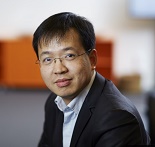

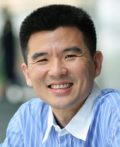
Jiafu Wan

South China University of Technology

Topic: 工业人形机器人技术架构与应用探索
Abstract: 本报告聚焦工业人形机器人,从国家政策导向与产业需求双重驱动背景出发,系统阐述具身智能 技术架构,包括多模态感知、决策规划、运动控制与部署执行四个核心层次。在此基础上,探讨具身智能领域的前沿技术探索,包括 SmolVLA、HIL-SERL、UMI 三个典型项目及其验证成果。结合实际落地案例,分享工业人形机器人在光伏板施工、新零售系统及牙膏企业智能产线中的具体应用实践,展示其在复杂工业场景下的适应能力与赋能价值,为智能制造与自动化升级提供参考。
Short Bios: 万加富,华南理工大学教授,博士生导师,IEEE Fellow(电气电子工程师学会会士), AAIS Fellow(国际人工智能科学院会士), 科睿唯安全球”高被引科学家”(2019-2024)。研究方向:信息通信技术 (人工智能、工业大数据等)与先进制造技术的交叉融合研究,包括:具身智能机器人,数字孪生,工业物联网,故障诊断等。主持(或合作单位负责人)科研项目30余项, 主持项目包括国家重点研发计划项目/课题, 国家科技重大专项子课题, 国家自然科学基金联合基金重点项目 , 广东省重点领域研发计划项目,华为技术有限公司合作项目等。发表 SCI 期刊论文 160 余篇 (IEEE 期刊论文 70 余篇 ),发表论文谷歌学术引用超过 32,000 次 , SCI 他引超过 14,000 次。已获发明专利授权 21 件。担任 IEEE Transactions on Industrial Informatics, IEEE/ ASME Transactions on Mechatronics, Journal of Industrial Information Integration, Journal of Intelligent Manufacturing 等期刊副编辑 (Associate Editor)。爱思唯尔 (Elsevier)“中国高被引学者”(2020-2025), 全球 前 2% 顶尖科学家 (2020-2025)。获广东省科技进步一等奖 (2018), 广东省科技进步二等奖 (2023), 海南省科技 进步二等奖 (2024), 湖北省自然科学奖二等奖 (2016) 等。

Panel

Jiajing Wu

Sun Yat-sen University
(Session Chair)

Xiaohua Jia

City University of Hong Kong

Tony Quek

Singapore University of Technology and Design

Pin-Han Ho

Shenzhen Institute for Advanced Study, UESTC

Zibin Zheng

Sun Yat-sen University

Min Chen

South China University of Technology

Jiafu Wan

South China University of Technology