Program
Keynote
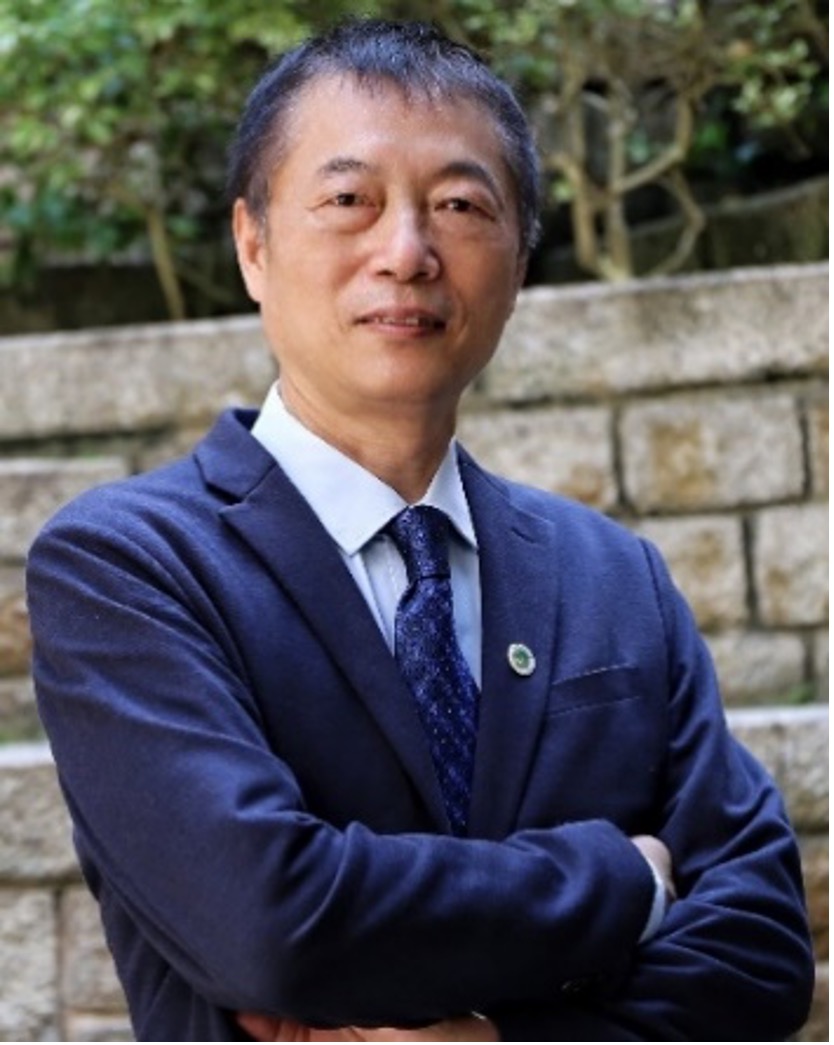
Wanlei Zhou
IEEE Fellow
City University of Macau
Shengli Xie
IEEE Fellow
Guangdong University of Technology
Topic: AI赋能的地~月卫星导航定位新技术
Abstract: 面对低空经济的发展以及自动驾驶、海上作业等复杂环境,对北斗卫星导航的高精度稳定定位技术提出了新的挑战,该挑战也是2022年中国卫星导航年会提出的我国未来卫星导航领域的六大挑战难题之首。其次,卫星导航正在从地球向更深远空间发展,欧美日等发达国家都在积极部署月球卫星导航工程,我国也以鹊桥系统为基础探讨北斗月球通导系统的建设,该问题也是六大挑战难题的第四个难题。本报告介绍了广东工业大学控制科学与工程学科团队,利用人工智能技术探讨六大挑战难题中的第一和第四即地-月卫星导航的系列研究成果。
Short Bios: 谢胜利,广东工业大学,博士生导师,智能信息处理研究所所长,国家杰出青年基金获得者,IEEE Fellow,全球前0.05%顶尖科学家,粤港澳大湾区人工智能与自动化学会会长,俄罗斯工程院外籍院士。教育部创新团队学科带头人、全国黄大年式教师团队负责人、控制科学与工程“国家A类学科”学科带头人;广东省师德标兵,全国高校“百个样板党支部”支部书记;教育部智能检测与制造物联重点实验室主任,教育部物联网智能信息处理国际合作联合实验室主任,广东省北斗芯片设计技术与应用工程实验室主任,粤港澳大湾区离散制造智能化联合实验室主任,国家“111创新引智基地”负责人。国际盲信号处理理论的先行者,证明了盲信号处理领域的“Stone猜想”,所创立的“盲信号可分性理论”被国际同行称为“Xie-定理”;该理论分别成功应用于北斗卫星信号的捕获与分析、医学信号的分离与处理、光学信号的检测与解调的应用中;分别获得国家自然科学二等奖、中国专利银奖、何梁何利科学技术进步奖、钱学森航空杰出贡献奖、秦元勋稳定性理论奖、丁颖科技奖、中国自动化学会科技进步特等奖,以及7项教育部、广东省科技一等奖。
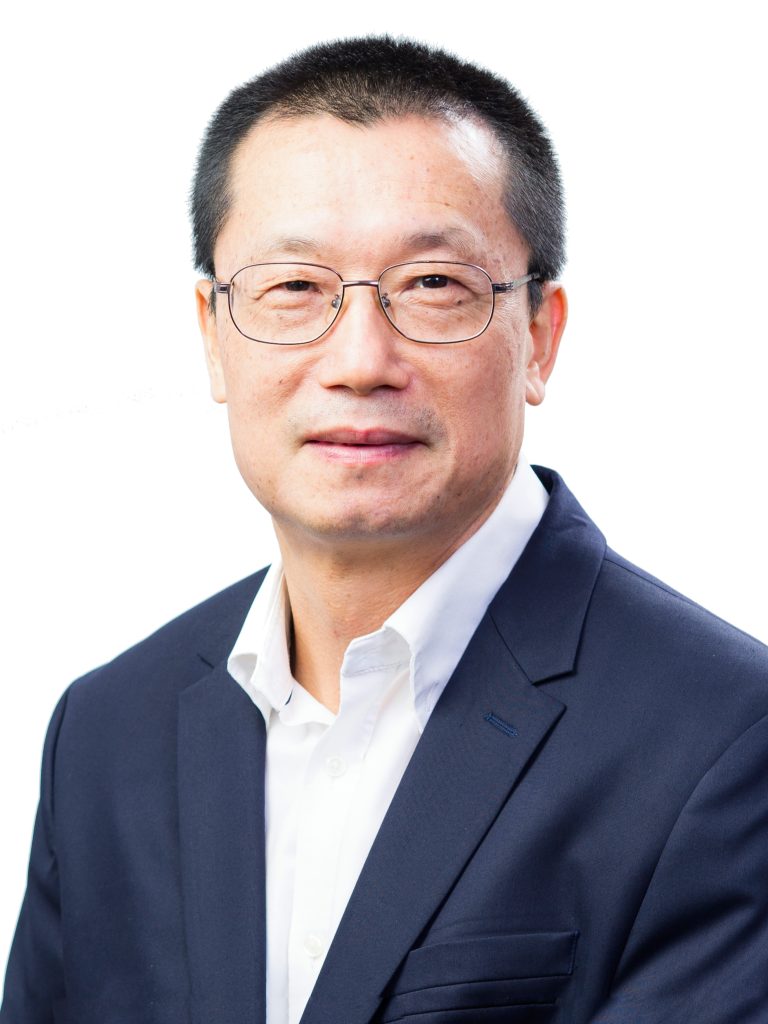
Xiaohua Jia
IEEE/ACM Fellow
City University of Hong Kong
Topic: Model-authorized, Incentivized and Unlearning-enabled Data Sharing for Large Model Machine Learning
Abstract: Machine Learning (ML) and AI systems heavily rely on the training over big and high quality data. As the training of large models almost exhausts the existing public data available in the cloud, we need to tap the data resources from private data owners. There are three important requirements for private owners to share their data out for AI model training: 1) security – the data shall be used and only be used for the training of the authorized model agreed by the data owner. The data cannot be used for any other purposes nor the content be revealed to any users. 2) incentive – the data owner shall be able to participate in the profit sharing of the trained model based on the contributions of his data to the model. 3) unlearning-enabled –the data owner shall be able to withdraw his data from a trained model. The “unlearned data” and its influence shall be removed from the model after the request unlearning. In this talk, we’ll discuss how the three requirements can be met and present our solutions.
Short Bios: Prof Xiaohua Jia received his BSc (1984) and MEng (1987) from University of Science and Technology of China, and DSc (1991) in Information Science from University of Tokyo. He is currently a Chair Professor with Dept of Computer Science at City University of Hong Kong. His research interests include cloud computing and distributed systems, data security and privacy, computer networks and mobile computing. Prof. Jia is an editor of IEEE Trans. on Computers (2021 – present), IEEE Internet of Things (2013-2018), IEEE Trans. on Parallel and Distributed Systems (2006-2009), etc. He is the Chair of IEEE ICDCS 2023, ACM ICN 2019, and ACM MobiHoc 2008, TPC Chair of IEEE GlobeCom 2010, and Area-Chair of IEEE INFOCOM 2015-2017. He is the recipient of IEEE TCDP Outstanding Service and Contributions Award 2024, and Hong Kong RGC Senior Research Fellow Award 2024. He is an ACM Distinguished Speaker, and a Fellow of ACM and IEEE (Computer Society).
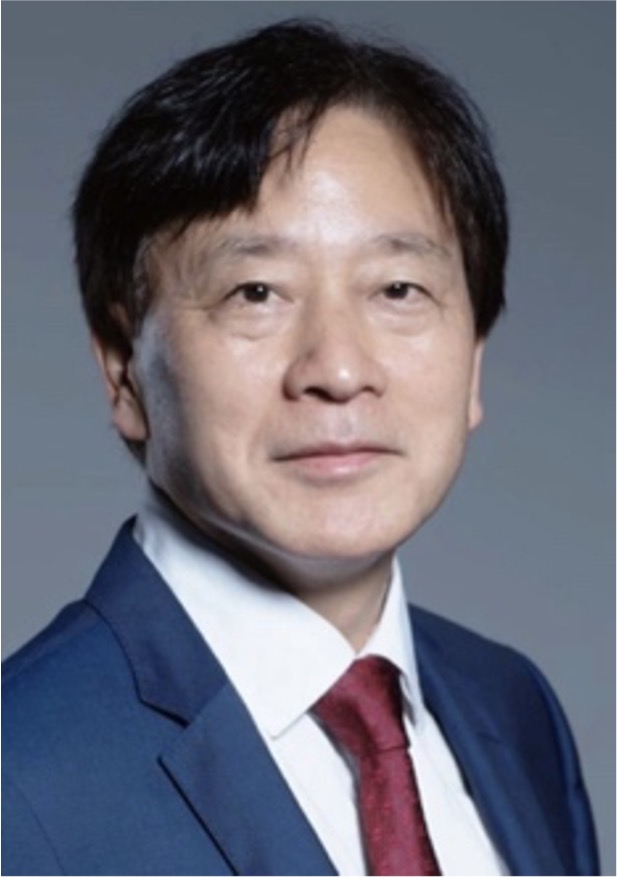
Yaochu Jin
IEEE Fellow
Westlake University
Topic: Data-driven optimization of complex systems assisted by small and large models
Abstract: This talk starts with a brief introduction to data-driven optimization of complex systems, including the motivation, main challenges and existing approaches. Then, it presents a few recent advances in this research field, such as large-scale optimization, privacy-preserving optimization, graph neural network-based end-to-end combinatorial optimization, diffusion model-based optimization, and LLM-assisted optimization. Finally, remaining challenges and open questions are discussed.
Short Bios: Yaochu Jin received the BSc, MSc and PhD degrees from the Electrical Engineering Department, Zhejiang University, Hangzhou, China in 1988, 1991 and 1996, respectively. He received the Dr.-Ing. from the Institute of Neuroinformatics, Ruhr University Bochum, Germany in 2001.
He is presently Chair Professor of AI, Director of the Trustworthy and General AI Laboratory, Head of the Artificial Intelligence Department, School of Engineering, Westlake University, Hangzhou, China. Prior to that, he was “Alexander von Humboldt Professor for Artificial Intelligence” endowed by the German Federal Ministry of Education and Research, with the Faculty of Technology, Bielefeld University, Germany from 2021 to 2023, and Surrey Distinguished Chair, Professor in Computational Intelligence, Department of Computer Science, University of Surrey, Guildford, U.K. from 2010 to 2021. He was also “Finland Distinguished Professor” with University of Jyväskylä, Finland, and “Changjiang Distinguished Visiting Professor” with the Northeastern University, China from 2015 to 2017. He was the President of the IEEE Computational Intelligence Society and the Editor-in-Chief of the IEEE Transactions on Cognitive and Developmental Systems. His main research interests include trustworthy AI for industry, embodied AI, and brain-like intelligence.
Prof Jin is the recipient of the 2025 IEEE Frank Rosenblatt Award. He has been named “Highly Cited Researcher” by Clarivate since 2019. He is a Member of Academia Europaea and Fellow of IEEE.
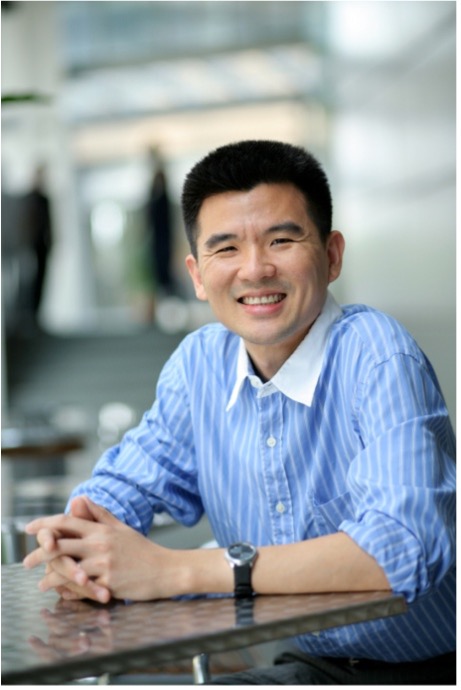
Tony Quek
IEEE Fellow
Singapore University of Technology and Design
Topic: Token Communications in AI-RAN: A Pathway towards Robust and Scalable AI Generative Services in Future Networks
Abstract: Token Communication is a emerging paradigm, where intelligent agents such as small and large language models and general-purpose robots are connected through fundamental AI processing units known as tokens. These discrete units are semantic information employed by foundation models. On the other hand, there is a recent trend to explore the concurrent use of converged computer-and-communications infrastructure to run RAN and AI workloads, enhancing platform utilization and creating new monetization opportunities. This concept is known as AI-Radio Access Network (AI-RAN), which natively implements AI-driven RAN functionalities, enabling site-specific RAN operations and improving KPIs. In this talk, we will provide an overview how token communication intersect with AI-RAN. Furthermore, we will also share some of our recent works in AI-RAN through Singapore’s Future Communications Research and Development Programme (FCP).
Short Bios: Tony Q.S. Quek received the B.E. and M.E. degrees in Electrical and Electronics Engineering from Tokyo Institute of Technology, respectively. At Massachusetts Institute of Technology, he earned the Ph.D. in Electrical Engineering and Computer Science. Currently, he is the Associate Provost (AI & Digital Innovation) and Cheng Tsang Man Chair Professor with Singapore University of Technology and Design (SUTD). He also serves as the Director of the Future Communications R\&D Programme, and the ST Engineering Distinguished Professor. He is a co-founder of Silence Laboratories, NeuroRAN, and DN-RAN. His current research topics include wireless communications and networking, network intelligence, non-terrestrial networks, open radio access network, AI-RAN, and 6G.
Dr. Quek was honored with the 2008 Philip Yeo Prize for Outstanding Achievement in Research, the 2012 IEEE William R. Bennett Prize, the 2015 SUTD Outstanding Education Awards — Excellence in Research, the 2016 IEEE Signal Processing Society Young Author Best Paper Award, the 2017 CTTC Early Achievement Award, the 2017 IEEE ComSoc AP Outstanding Paper Award, the 2020 IEEE Communications Society Young Author Best Paper Award, the 2020 IEEE Stephen O. Rice Prize, the 2020 Nokia Visiting Professor, the 2022 IEEE Signal Processing Society Best Paper Award, the 2024 IIT Bombay International Award For Excellence in Research in Engineering and Technology, the IEEE Communications Society WTC Recognition Award 2024, and the Public Administration Medal (Bronze). He is an IEEE Fellow, a WWRF Fellow, an AIIA Fellow, a member of NAAI, and a Fellow of the Academy of Engineering Singapore.