Program
Workshop: Blockchain and AI for Future Network Management
Workshop Organizer

Zheng Chang
University of Electronic Science and Technology of China
Speakers

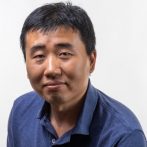
Huanlai Xing
Southwest Jiaotong University
Topic: On Agent-to-Agent Semantic Communications: Concepts, Challenges, and Trends
Abstract: Agent-to-Agent Semantic Communication (A2A-SC) is the autonomous exchange of information and coordinated decision-making among intelligent agents, with characteristics like real-time interaction and multi-modal data processing. Traditional A2A communication has shortcomings, such as semantic ambiguity and poor scalability, which can be addressed by semantic communication, which transmits the meaning or task-relevant essence of information rather than raw data, offering advantages like efficient transmission, noise robustness, and goal-driven coordination for intelligent collaboration. The report notes significant global policy and protocol support from organizations like the Linux Foundation, IEEE P3394 standard, and major companies. The latter is demonstrated through a detailed example where specialized agents use deep semantic representations and a universal messaging format to collaboratively decide on running suitability based on weather and location. Currently, A2A-SC is facing critical security challenges, such as agent spoofing, privacy leakage, and denial-of-service attacks. Future directions are lightweight malicious input filters, decentralized communication archiving, real-time supervision, and cross-protocol defense architectures to build a more reliable and secure ecosystem.
Short Bios: Huanlai Xing received his Ph.D. degree in computer science from the University of Nottingham, Nottingham, U.K., in 2013. He was a Visiting Scholar in Computer Science, The University of Rhode Island, USA, during 2020-2021. Huanlai Xing is with the School of Computing and Artificial Intelligence, Southwest Jiaotong University (SWJTU), and Tangshan Institute of SWJTU. He is an associate editor of IEEE Signal Processing Letters. He was on the Editorial Board of SCIENCE CHINA INFORMATION SCIENCES. He was a member of several international conference programs and senior program committees, such as IJCAI, ECML-PKDD, MobiMedia, ISCIT, ICCC, TrustCom, IJCNN, and ICSINC. His research interests include semantic communication, representation learning, data mining, reinforcement learning, machine learning, network function virtualization, and software-defined networking.
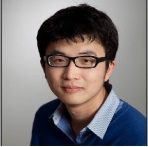

Jiajing Wu
Sun Yat-sen University
Topic: 大模型时代的区块链服务安全:挑战与机遇
Abstract: 区块链已成为推动数字经济的重要基础设施,但其匿名性、多方参与等特性也带来了频发的诈骗、洗钱等非法行为,威胁生态安全。现有分析工具在区块链服务安全取得了一定进展,但在泛化能力和推理能力上仍存在局限。近年来,生成式大模型技术迅猛发展,正加速赋能各类数字服务任务,也为区块链服务安全与治理研究带来了新的思路与范式。报告将聚焦于如何将 LLM 技术融入区块链服务安全问题中,系统梳理其在欺诈检测、智能合约漏洞分析、合规监管等任务中的研究现状,并介绍我们团队在这一方向上的探索进展与阶段性成果,最后展望该领域的开放问题与未来研究方向。
Short Bios: 中山大学软件工程学院教授、副院长、博士生导师,现任广东省区块链工程技术研究中心副主任,ACM-中国珠海分会秘书长,IEEE和中国计算机学院高级会员。近五年承担包括国家重点研发计划、国家自然科学基金重点项目、广东省重点领域研发计划等十余项科研项目。在国内外高水平期刊和会议发表论文70余篇,获中国计算机学会自然科学二等奖,广东省计算机学会自然科学一等奖,获最佳/优秀论文奖7次,并编著出版Springer专著3部。担任多个国内外期刊的客座编辑以及多个学术会议的组织工作。主要研究方向包括区块链、智能合约、复杂网络、图机器学习等。

Wenbing Zhao
Cleveland State University
Topic: The Blockchain Technology: A Reflection
Abstract: The blockchain technology was once hyped as the next big thing after the World Wide Web, which has the potential to completely transform the fabric of business transactions. Unfortunately, more than 15 years have passed since the creation of Bitcoin in 2009, there is still no killer app as people had hoped. In this talk, I provide a reflection on why we have this disappointing outcome. First, I examine the theoretical foundation for the blockchain technology. We show that the decentralized consensus and the design of smart contracts, while constitute great technological innovation, have their limitations. Second, I commend on the introduction of alternative blockchains, i.e., private and consortium blockchains. Again, although these alternative blockchains have their merit, they create great confusion and inevitably lead to misconceptions about the blockchain technology. The most pervasive issue is equating blockchain to data immutability. Third, I go over the applications of blockchain in several sectors, including cyber-physical systems, energy systems, and communication systems. While a large number of papers have published, the great majority of them are in the preliminary stages. Even for the few that have actually been deployed, hardly any survived once the investment/funding for the projects ended.
Short Bios: Dr. Zhao is a Professor at the Department of Electrical and Computer Engineering, Cleveland State University. He got his BS and MS degrees from the Physics Department in Peking University. He earned his Ph.D. at University of California, Santa Barbara in 2002. He has over 200 peer-reviewed publications and the author of the research monograph titled “From Traditional Fault Tolerance to Blockchain.” Dr. Zhao’s research spans from dependable distributed systems, machine learning, and artificial intelligence. His research has been funded by the US NSF, US Department of Energy, US Department of Education, US Department of Transportation, and State-level agencies. He has delivered more than 10 keynotes, tutorials, public talks and demonstrations in various conferences, industry and academic venues. Dr. Zhao is an associate editor for IEEE Access, MDPI Computers, CMES, and a member of the editorial board of several international journals, including MDPI Sensors, Applied System Innovation, and Internal Journal of Parallel, Emergent and Distributed Systems. He is currently an IEEE Senior Member and serves as the treasurer of the IEEE Cleveland Section.

Yingjie Zhou
Sichuan University
Topic: 弱监督异常检测与应用
Abstract: 弱监督异常检测旨在针对仅有极少量标注异常样本和大量未标注数据的情况下,构建一个能够有效区分正常模式与异常偏离模式的异常检测器。本次报告将分别针对表格数据异常检测、图节点异常检测和企业网络内部威胁检测情形,介绍在目标对象特征编码、合成扰动引导隐空间特征学习等方向弱监督异常检测的最新研究进展。
Short Bios: 周颖杰,四川大学教授/博士生导师,IEEE SPS MLSP TC执委(全球40;全国6),四川省杰青。主要从事行为数据智能分析、时间序列分析、异常检测、具身智能、智能体与安全等方向的研究。获得世界500强企业项目成果优秀奖、CCF-B类推荐会议ICME 2025最佳演示论文奖、CCF-C类推荐会议HPCC 2022最佳论文奖等。担任IEEE汇刊TETCI AE、Neural Networks AE,IEEE ICASSP Senior Area Chair等。主持国家自然科学基金及世界500强企业资助项目等,研究成果已在国内行业龙头企业的实际大规模场景应用部署且运行状况良好。

Hongbo Liu
University of Electronic Science and Technology of China
Topic: 物理层特征重构与可控映射:无线物理层密钥生成的理论与算法研究
Abstract: 本工作聚焦于无线物理层密钥生成,核心思想在于突破传统依赖实时信道测量直接提取密钥的局限,转而探索对物理层特征进行主动重构与可控映射的新机制。通过设计可变长度分段匹配、信道混淆矩阵封装及主动导频操纵等方法,旨在将不可控的随机信道响应转化为高自由度、高一致性的密钥熵源,从根本上解决环境适应性差与密钥不一致难题。该研究为构建无需预共享且抗量子攻击的轻量级物理层安全体系提供了新的理论支撑与技术路径。
Short Bios: 刘鸿博,教授/博士生导师/国家级青年人才,2013年于美国斯蒂文斯理工学院获得电子工程博士学位,师从Yingying Chen教授(ACM Fellow,IEEE Fellow,NAI Fellow),之后加入印第安纳大学-普渡大学-印第安纳波利斯分校历任助理教授和副教授,2020年加入电子科技大学计算机科学与工程学院(网络空间安全学院)任教至今。长期从事无线物理层安全、智能感知计算、数据安全与隐私保护等领域的基础和应用研究,发表在包括ACM Mobicom,Ubicomp,IEEE INFOCOM,IEEE TMC等在内的相关领域国际高水平学术期刊和会议论文100余篇,曾获ACM MobiCom 2011、IEEE CNS 2013 & 2018和IEEE MASS 2023最佳论文亚军奖,获授权美国专利1项,中国专利5项,相关研究获得科技部重点研发项目(课题负责人),中国自然科学基金面上项目(项目负责人),四川省自然基金面上项目(项目负责人),和美国自然科学基金项目(项目负责人)等资助,部分研究成果应用于智慧城市、智能家居和公共场所安防等领域并取得了一定经济价值。

Chen Sun
Sony (China) Ltd.
Topic: Synergizing Blockchain and AI for Next-Generation Networks: From Spectrum Sharing to Semantic Communication and Sensing
Abstract: This presentation explores the synergy of blockchain and Artificial Intelligence (AI) in orchestrating dynamic network resources and secure application layers. Building upon an optimized communication and radio-sensing substrate, we present advanced cooperative perception use cases, focusing specifically on “see-through” Vehicle-to-Everything (V2X) and collaborative multi-node sensing. We demonstrate how semantic communication—combined with AI and collaborative sensing—can drastically reduce data overhead to extend a vehicle’s line-of-sight beyond physical obstacles in real time. Finally, we introduce Integrated Sensing and Communication (ISAC) frameworks as a powerful multi-modal extension to traditional image sensing, enabling robust, radio-frequency-based environmental mapping even when optical cameras are obstructed.
Short Bios: Chen Sun serves as the Deputy Head of the Beijing Lab, Sony R&D Center. He is a highly accomplished researcher and inventor with 139 peer-reviewed publications—comprising 74 journal papers and 65 conference papers—and the recipient of two Best Paper Awards. A recognized pioneer in wireless standards, he holds the IEEE 1900.6 Working Group Chair Award for Leadership and IEEE Outstanding Contributions Awards for both IEEE 802.11af and 802.19.1. His industry-leading patent portfolio features 186 granted patents and 111 pending applications worldwide, including 69 as the first inventor, earning him two Sony Patent Awards. His technical expertise covers smart antennas, cognitive radio, V2X, federated learning, and AI in wireless networks.